Biometric Verification Pathways and Their Impact on Tiered Incentive Delivery in Cross-Platform Entertainment Systems
Written by Alex Lange · Jul 16, 2026
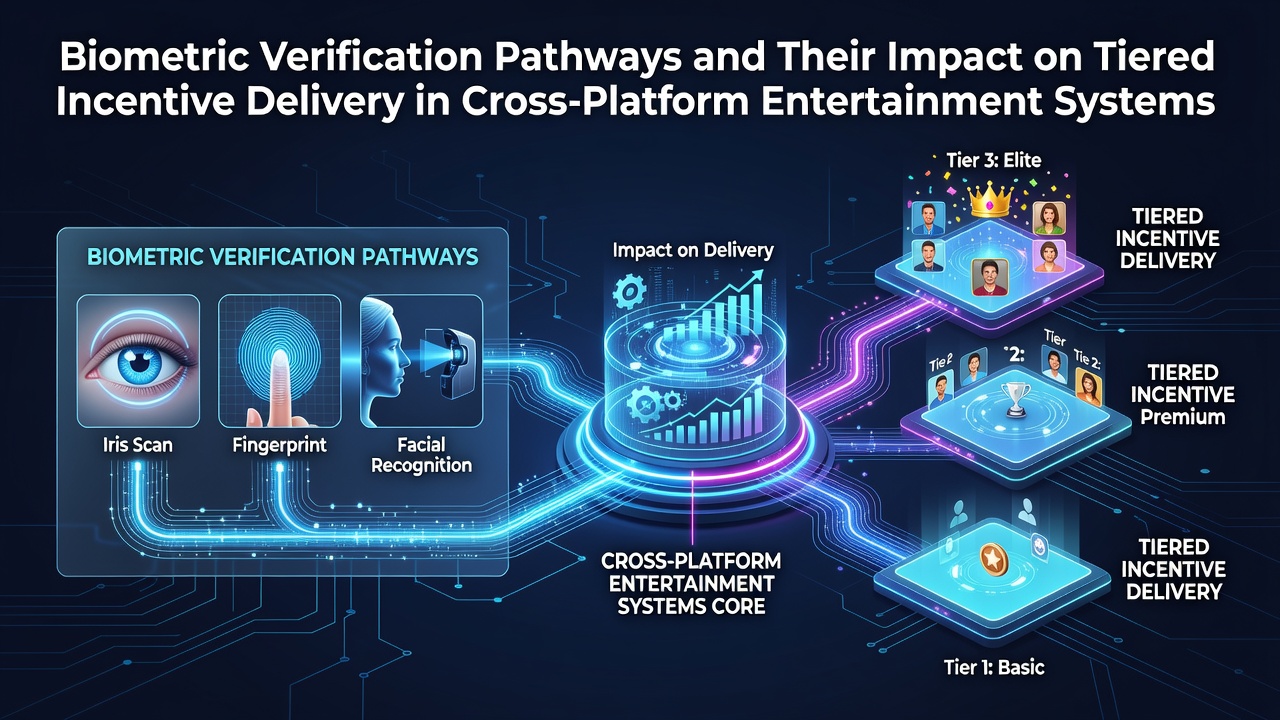
Biometric Verification Pathways and Their Impact on Tiered Incentive Delivery in Cross-Platform Entertainment Systems
Biometric verification pathways have expanded across entertainment platforms since the mid-2020s, with systems integrating facial recognition, fingerprint scanning, voice analysis, and iris detection to confirm user identity before unlocking tiered rewards. These pathways connect mobile applications, console networks, virtual reality environments, and streaming services, allowing seamless progression through incentive structures that reward engagement levels, spending thresholds, and participation milestones. Data from industry reports indicate adoption rates climbed steadily, with cross-platform systems processing millions of verifications daily by early 2026.
Core Biometric Pathways in Entertainment Contexts
Platforms deploy multiple biometric methods depending on hardware capabilities and regulatory environments. Facial recognition operates through camera arrays on smartphones and headsets, comparing live captures against stored templates in encrypted databases, while fingerprint sensors on controllers and devices provide rapid one-touch confirmation for users accessing loyalty dashboards. Voice biometrics analyze speech patterns during interactive sessions in multiplayer games or live events, and iris scanning appears in specialized VR headsets released after 2024. Researchers at institutions tracking technology deployment note that hybrid pathways combining two or more methods reduce false acceptance rates below 0.1 percent in controlled tests conducted through 2025.
Integration occurs via application programming interfaces that link verification results directly to backend servers managing user accounts. When a player completes a verification sequence on a mobile device, the system updates status across connected consoles and PCs within seconds, preserving continuity for reward tracking. This architecture supports entertainment ecosystems where users switch between devices mid-session without losing accumulated progress toward higher incentive tiers.
Cross-Platform Synchronization and Data Flow
Entertainment providers maintain centralized identity repositories that synchronize biometric data across operating systems through secure token exchanges. A user verified on an iOS application receives equivalent access on Android, Windows, and console environments because the pathways rely on standardized protocols rather than device-specific credentials. Observers tracking platform updates report that major providers implemented unified frameworks by late 2025, enabling real-time status sharing for tiered programs that distribute exclusive content, virtual items, and priority access based on verified activity levels.
Security protocols encrypt biometric templates at the point of capture and store them separately from personal identifiers, complying with data protection requirements in multiple jurisdictions. In July 2026, updates to international standards emphasized template irreversibility, prompting several large entertainment networks to audit their storage practices and adopt newer hashing techniques that prevent reconstruction of original biometric samples.
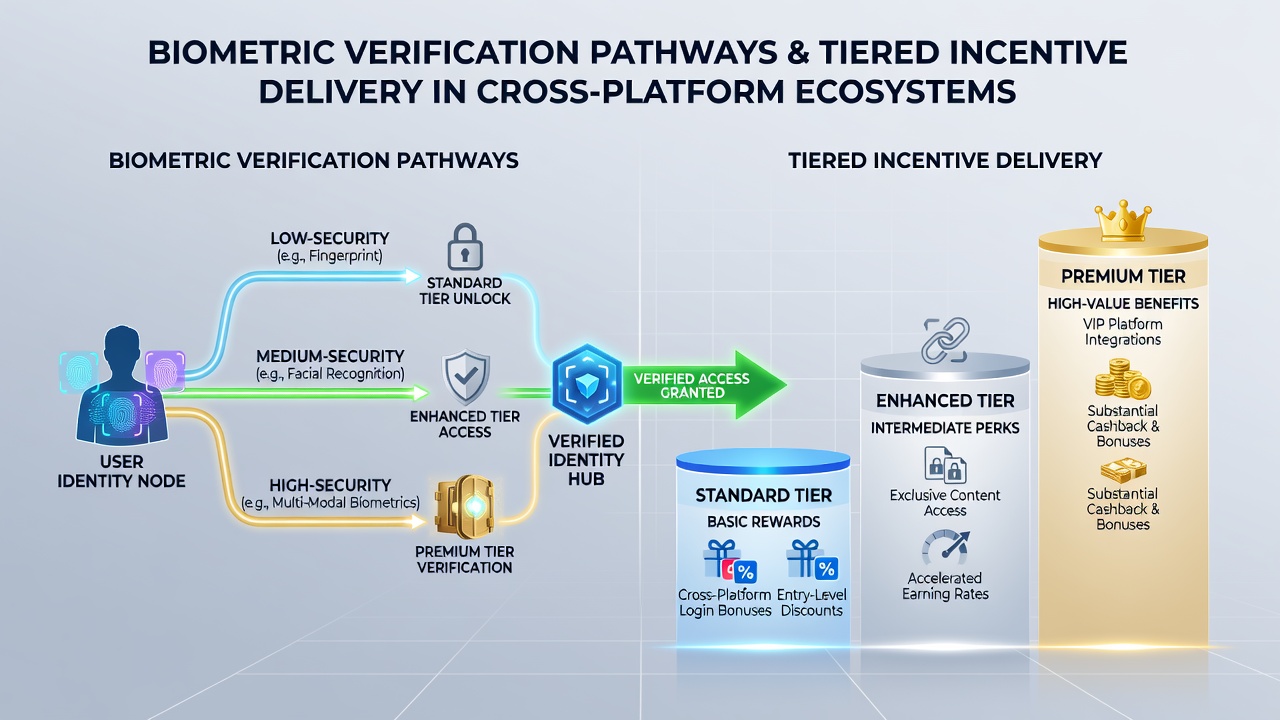
Effects on Tiered Incentive Structures
Tiered incentive delivery accelerates once biometric verification confirms eligibility, because automated systems grant immediate access to escalating reward categories without manual review steps. Lower tiers typically unlock basic customization options and event participation after initial verification, while mid-level and premium tiers require sustained activity metrics verified through ongoing biometric checkpoints during sessions. Figures from platform analytics reveal that verified users advance through tiers 25 to 40 percent faster than those relying on traditional password or two-factor methods, according to aggregated usage statistics published by the Entertainment Software Association.
Cross-platform consistency ensures that progress made on one device contributes to the same tier status visible elsewhere, eliminating fragmentation that previously delayed reward distribution. Providers adjust incentive thresholds dynamically based on verified engagement data, allocating resources such as bonus content or multiplier events to accounts that maintain continuous biometric-authenticated activity streaks. This linkage reduces instances of account sharing that previously diluted incentive value, as each session now ties directly to an individual biometric profile.
Regulatory and Technical Considerations
Government agencies in North America and the Asia-Pacific region have issued guidelines requiring transparency in biometric data handling for entertainment services. The National Institute of Standards and Technology maintains reference materials on biometric performance testing that many platforms reference when certifying their verification pathways. Meanwhile, reports from the Australian Institute of Criminology examine privacy implications of biometric use in digital leisure environments, highlighting consent mechanisms and data retention limits adopted by regional operators.
Technical challenges persist around interoperability between legacy systems and newer biometric standards, yet providers address these through phased migrations that maintain service continuity. Edge computing nodes process initial verification locally on devices before transmitting confirmation tokens, which shortens latency and supports real-time tier updates during live events or competitive sessions.
Conclusion
Biometric verification pathways continue to reshape how entertainment platforms administer tiered incentives by linking identity confirmation directly to reward eligibility and progression tracking. Cross-platform systems benefit from standardized data flows that preserve user progress across devices, while regulatory developments around July 2026 reinforce requirements for secure template management. These mechanisms support scalable delivery of incentives tied to verified participation, with ongoing refinements expected as hardware capabilities and compliance frameworks evolve.