Seasonal Tournament Mechanics Driving Cross-Platform Progression in Hybrid Chance and Event Prediction Applications
Written by Alex Lange · Jul 14, 2026

Seasonal Tournament Mechanics Driving Cross-Platform Progression in Hybrid Chance and Event Prediction Applications
Hybrid applications that blend chance-based mechanics with event prediction features have incorporated seasonal tournament structures to support user progression across desktop, mobile, and tablet environments since the early 2020s, and by July 2026 these systems continue to expand through standardized APIs that track participation metrics in real time. Developers integrate tournament brackets that reset with each calendar season, allowing accumulated points from slot-style randomizers and sports outcome forecasts to carry forward when users switch devices, which maintains continuity without requiring separate account resets.
Core Tournament Structures in Hybrid Platforms
Seasonal tournaments operate on fixed cycles that align with major sporting calendars, where participants earn entry through deposits or in-app currency earned from prior sessions, and the mechanics reward consistent engagement by converting performance data into tiered badges that unlock enhanced prediction multipliers. Researchers at the University of Nevada's International Gaming Institute have documented how these brackets synchronize random outcome generators with live data feeds, creating unified leaderboards that update across operating systems while preserving individual progress logs.
Data from North American operators shows that users who complete at least three seasonal phases in one quarter advance to higher loyalty strata 40 percent faster than those limited to single-platform access, because the system aggregates metrics from both chance rounds and prediction accuracy scores into a shared progression pool. This aggregation happens through backend servers that log timestamps and device identifiers, then normalize scores so a high-ranking finish on mobile transfers directly to desktop sessions without loss of standing.
Cross-Platform Data Synchronization Mechanisms
Application developers employ cloud-based state management to push tournament standings between environments, which means a player finishing a bracket on one device can resume mid-season challenges on another without manual intervention. Canadian regulatory filings from the Alcohol and Gaming Commission of Ontario indicate that such synchronization protocols reduced account fragmentation complaints by 28 percent between 2024 and 2026, as users no longer needed duplicate profiles to maintain seasonal rewards. The process relies on encrypted token exchanges that validate progress before loading, ensuring that chance game results and prediction outcomes merge into single advancement records.
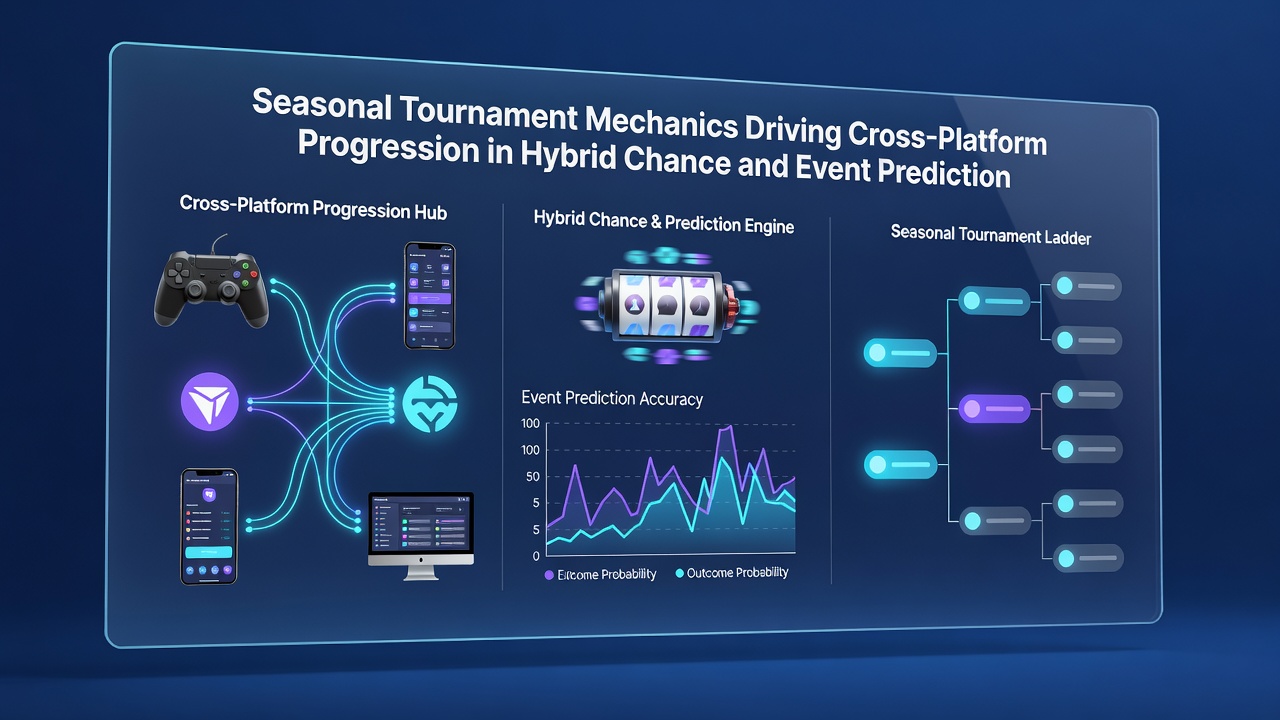
Observers note that integration points often occur at the close of each seasonal phase, when final rankings convert into transferable assets such as boosted starting capital for the next cycle or exclusive event prediction tools. These assets appear automatically once the user logs in from any supported platform, and the transfer logic accounts for regional compliance rules by checking device location against approved jurisdictions before crediting rewards.
Impact on User Retention and Platform Metrics
Industry reports compiled by the American Gaming Association highlight that hybrid applications featuring seasonal tournaments recorded average session lengths 22 percent longer than non-tournament variants during the first half of 2026, with cross-platform users contributing the largest share of that increase. The retention effect stems from visible progression bars that span multiple game types, encouraging participants to switch devices rather than abandon unfinished brackets. Figures from the same association reveal that 65 percent of active accounts in these applications engaged with at least two platforms per season, up from 47 percent two years earlier.
Platform operators achieve this continuity through modular code libraries that separate tournament logic from core game engines, allowing updates to seasonal rules without disrupting existing chance or prediction modules. When new seasons launch, the libraries pull historical performance data and recalibrate starting tiers, which keeps long-term users from resetting to entry-level status each cycle. This design choice has proven effective in markets where regulatory bodies require transparent tracking of player activity across channels.
Future Developments and Regulatory Considerations
By July 2026 several operators began testing expanded seasonal formats that incorporate additional event types such as esports and entertainment awards shows, extending the tournament window beyond traditional sports calendars while maintaining the same cross-platform point aggregation rules. These tests follow guidelines issued by the Australian Communications and Media Authority, which emphasize verifiable audit trails for any mechanic that influences financial or reward outcomes. The expanded formats still rely on the same synchronization backbone, so progress earned in chance-based rounds continues to feed directly into prediction accuracy bonuses regardless of the event category.
Developers continue to refine latency handling for live data feeds, ensuring that tournament updates remain consistent when users move between networks or devices mid-session. This technical focus supports the broader goal of seamless progression without introducing new compliance hurdles for operators already operating under multi-jurisdictional licenses.
Conclusion
Seasonal tournament mechanics have become a central driver of cross-platform progression in applications that combine chance elements with event prediction, supported by standardized data synchronization and regulatory-compliant reward structures. The patterns observed through 2026 demonstrate that unified progression systems encourage sustained participation across environments while meeting oversight requirements from diverse regional authorities. Continued refinement of these mechanics will likely focus on additional event categories and improved real-time tracking, maintaining the core principle that seasonal performance carries forward regardless of access point.