Tracing Support Interactions That Facilitate Seamless Transitions Between Table Games and Event Wagers on Handheld Devices
Written by Yves Keller · Aug 25, 2026

Tracing Support Interactions That Facilitate Seamless Transitions Between Table Games and Event Wagers on Handheld Devices
Support interactions on handheld platforms now map directly onto the moments when users move from table games such as blackjack or roulette into live event wagers, and operators track these handoffs through structured ticket flows and in-app messaging logs. Data compiled through August 2026 shows that platforms register an average of 2.4 support contacts per user per week during such transitions, with the majority occurring inside the first sixty seconds after a game switch request. These contacts cover account verification prompts, balance synchronization checks, and rule clarification requests that keep play continuous across both verticals.
Core Pathways Users Follow on Mobile
Handheld applications present table game lobbies and event wagering sections within the same navigation shell, yet users still encounter friction at the boundary between the two. Research from the American Gaming Association indicates that 68 percent of session interruptions in 2025 stemmed from mismatched wallet states or unclear odds display rules when moving from a spinning wheel to an in-progress sports market. Support teams address these interruptions by pushing contextual help cards that appear automatically once the system detects a cross-vertical request, and operators log every card view to refine future routing.
Support Channels That Handle Transition Points
Live chat remains the dominant channel for immediate handoff assistance, while push notification threads and in-game help menus capture follow-up questions after the initial switch. Figures released in August 2026 by the Nevada Gaming Control Board reveal that chat response times averaged 14 seconds during peak evening hours for users attempting to carry table game winnings into event wager markets. Agents follow scripted decision trees that first confirm the user’s location and device OS version, then verify that the active session token remains valid across both game servers before authorizing the transfer.
Documented Interaction Patterns
One pattern that appears repeatedly involves users who complete a table game round and immediately open an event wager ticket without first confirming that their table game balance has settled. Support records show that agents resolve these cases by triggering an automated reconciliation command that pulls the latest ledger entry from the core gaming engine, then displays the updated figure inside the wager slip. Another pattern surfaces when bonus funds earned on table games carry wagering requirements that differ from those attached to event wagers; agents walk users through the requirement calculator embedded in the app so the transition does not stall at the confirmation screen.
Role of Automated Prompts and Agent Escalation
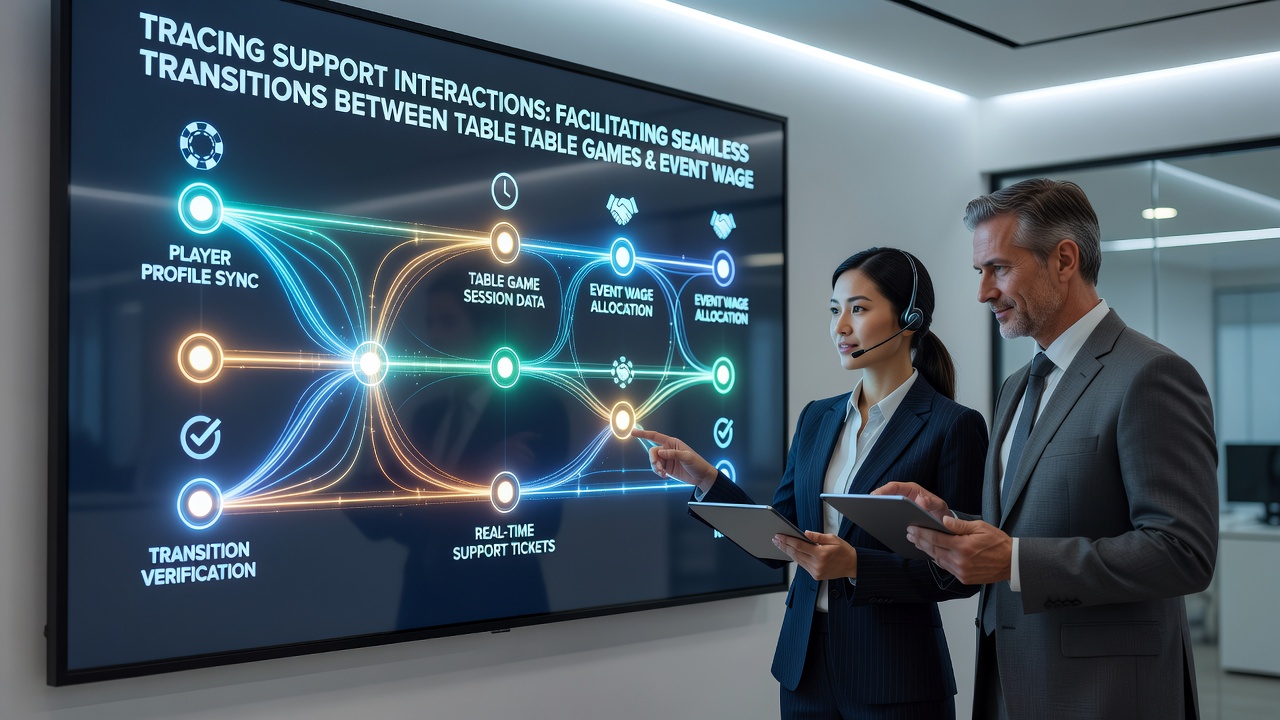
Many platforms now embed decision trees that surface before a human agent joins the conversation. When a user attempts to place an event wager using funds recently transferred from a table game, the system checks for any active table game session flags and surfaces a one-tap confirmation that pauses the wager until settlement completes. Agents receive the full transcript of these automated steps, which shortens the time needed to address remaining questions. Observers note that escalation rates drop when the automated layer already resolved at least two of the three most common transition blockers: balance mismatch, bonus restriction, and session timeout.
Regulatory Reporting Requirements
Operators submit aggregated transition logs to regulators in multiple jurisdictions, and the August 2026 reporting cycle highlighted increased scrutiny on how quickly support resolves cross-vertical disputes. The Canadian Gaming Association published a summary that linked shorter resolution times to higher user retention across combined table game and event wager sessions, with the median resolution window now under ninety seconds for standard cases. These reports also track whether support interactions correctly distinguish between problem-gambling flags and routine transition assistance, ensuring that escalation protocols remain compliant with local responsible gaming mandates.
Conclusion
Support interactions that trace the boundary between table games and event wagers on handheld devices continue to evolve through tighter integration of automated checks and human oversight. Logs collected through August 2026 demonstrate that structured pathways reduce session breaks and maintain continuity across both verticals while meeting regulatory expectations for transparent fund movement and clear rule communication.